Loud work gets measured.
Essential work gets assumed

Coordination in cancer care has never been in a dataset. Until today.

 Join the Coordination Study

The lived experience

"I don't know if someone's doing it. So I'm probably going to do it just in case."

"Coordination failures in oncology are framed as communication issues. In my experience they are structural workflow problems."

"When the table wobbles, we blame the person who leans on it."

These are not quotes from a report. They are from cancer care professionals in seven countries describing the same invisible pattern.

What the study is revealing

People arrive naming one coordination challenge. Several leave naming a different one. Every time, the shift moves in the same direction: from what they experience toward where it originates.

The assessment does not change what they know. It changes what they can see.

→ A medical oncologist carries eight coordination tasks without a single one formally recognised. A palliative care specialist carries seven. An oncology nurse carries five that have no name in any job description.

→ Nurses carry the most coordination work and report the least psychological safety. Physicians report the most safety and the least information flow. The gap between who holds the system together and who feels safe doing so has never been measured.

→ Half of all respondents name staff turnover and increasing case volume as the forces stretching their teams. Not new technology. Not AI. The people absorbing the complexity.

→ Where institutional infrastructure is stronger, the same tasks exist but are distributed across people who have never been asked to see them.

Your 10 minutes sharpen the image.

 Join the Coordination Study

Why this work is invisible

Nobody designs coordination into cancer care. It is inherited. Every specialisation, every new protocol, every AI tool adds complexity. The coordination that holds it together is absorbed by the people closest to the gaps. It runs on informal knowledge, personal relationships, and workarounds accumulated over years. It has no job description, no dataset, no line in any governance framework.

When it works, nobody notices. When it fails, the expertise and the data are still there. The system simply cannot move.

The people who design clinical workflows are not the people who absorb the demands those workflows create. That distance is where coordination capacity lives and where it breaks.

This is not a communication problem with a training solution. It is a structural gap that has never been named as such.

What Nexus Recognita is doing about it

Nexus Recognita is a research and methodology organisation focused on coordination capacity in cancer care teams. We study how it works, where it breaks, and what it takes to develop it.

The Cancer Care Coordination Study is the first systematic measurement of coordination capacity across cancer care roles and settings. It is live, with respondents across seven countries and disciplines. Findings will be submitted to ESMO/EONS Congress 2026.

The Coordination Roundtable Series is a monthly conversation on the coordination challenges that do not appear in clinical guidelines. No pitch. No agenda beyond the conversation. The next roundtable is May 21, 2026.

The Shift is an 8-week individual development programme for cancer care professionals ready to work on coordination capacity inside their own sphere of influence. It produces colleague-verified change, not self-reported insight.


Our Mission

We bridge specialists and unify teams in cancer care.

An increasingly complex system that cannot see the people who hold it together cannot care for the humans it exists for.

We make coordination capacity visible, measurable, and actionable.

About us

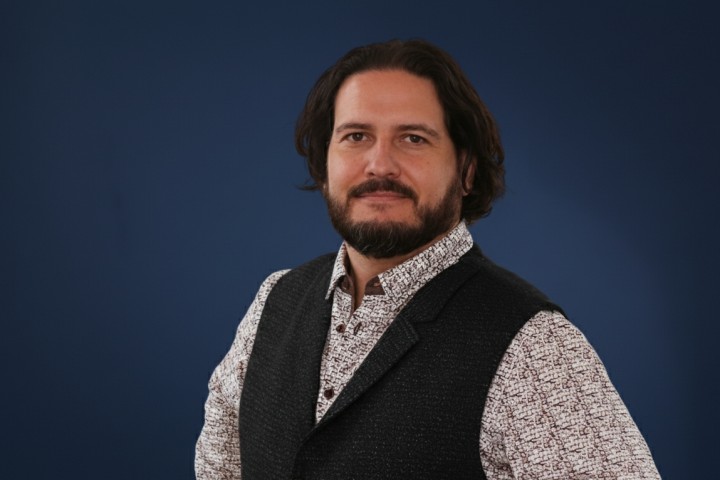
Nexus Recognita was founded by István Borbíró, PhD, and Corina Richter.

Between them: years inside cancer care, medical communications, organisational development, and system design. They built this because the same coordination pattern kept repeating across countries and institutions.

Nobody measured it. Now someone does.

Read more

The Six Dimensions Framework

Six dimensions of coordination capacity, built from analysis of 69+ peer-reviewed studies on healthcare team coordination across 25+ countries.

Each dimension measurable. Each one actionable.

About us

Stay connected

We share what we are learning as the research develops. No schedule. Just findings worth your time. *

69+

Peer-Reviewed Studies

10+

Countries Represented

2026

ESMO/EONS Congress

45+

Oncology Studies

20+

Systematic Reviews

8+

Cancer care roles

Home Home 2 draft